



Association Between Obesity and Poor Prognosis in Patients Receiving Anlotinib for Advanced Non-Small Cell Lung Cancer - PubMed
Source : https://pubmed.ncbi.nlm.nih.gov/35431919/
Background: Anlotinib is a novel anti-angiogenesis drug. In non-small cell lung cancer (NSCLC), high body mass index (BMI) was not associated with worse survival in patients treated with bevacizumab compared...
Conclusion: Our results revealed a U-shaped relationship between BMI and risk of death in patients receiving anlotinib for advanced NSCLC. More importantly, obesity (BMI ≥28 kg/m2) might be a potential predictor of use of anlotinib in advanced NSCLC.
-
Albert Dekker4yrobesity is risk factor for everything

Differential proteome and functional analysis of NSCLC cell lines in response to Tualang honey treatment - PubMed
Source : https://pubmed.ncbi.nlm.nih.gov/35398242/
doi: 10.1016/j.jep.2022.115264. Online ahead of print. 1 Department of Molecular Medicine, Faculty of Medicine, University of Malaya, 50603, Kuala Lumpur, Malaysia. Electronic address: [email protected]. 2 Department of Molecular Medicine, Faculty...
Conclusions: Our findings suggested the anticancer activity of TH on NSCLC cells through modulation of pertinent cancer-related proteins that are associated with cell proliferation, apoptosis inhibition, and induction of angiogenesis.
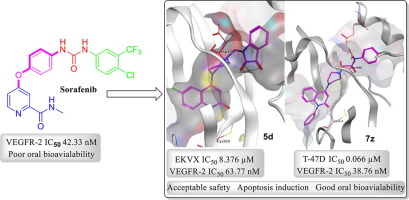
Design, synthesis, in vitro antiproliferative evaluation and in silico studies of new VEGFR-2 inhibitors based on 4-piperazinylquinolin-2(1H)-one scaffold
Source : https://www.sciencedirect.com/science/article/abs/pii/S0045206822000360?via=ihub
New 4-(piperazin-1-yl)quinolin-2(1 H)-ones were synthesized and characterized. * 5d and 7z showed higher cytotoxic activity than staurosporine against T-47D breast cancer and EKVX NSCLC cell lines, respectively. * 7z was...
Conclusion/Relevance: These studies further suggested that the 4-piperazinylquinolin-2(1H)-one derivatives developed in this study play a critical role in modulating VEGFR, and guide the design of innovative anticancer therapies.

Implication of VEGFR2 Polymorphism on the Prognosis of Anlotinib Monotherapy for Patients With Treatment-Refractory Advanced NSCLC: An Exploratory Study - PubMed
Source : https://pubmed.ncbi.nlm.nih.gov/35443836/
1 Peking Union Medical College Hospital, Chinese Academy of Medical Sciences, Beijing, China. 2 66526Beijing Jishuitan Hospital, the Fourth Medical College of Peking University, Beijing, China. 3 The Fifth Medical...
Conclusion: Anlotinib monotherapy exhibited potential efficacy for patients with treatment-refractory advanced NSCLC. VEGFR2 polymorphism 4397T>C might be used as a promising biomarker to predict the survival of patients with NSCLC who received anlotinib administration.

Rebiopsy in advanced non-small cell lung cancer, clinical relevance and prognostic implications
Source : https://www.lungcancerjournal.info/article/S0169-5002(22)00408-1/fulltext
Within the past 15 years, therapy of stage IV non-small cell lung cancer (NSCLC) has evolved from "one size fits all" chemotherapy to the poster child of genomic-based precision oncology...
Conclusions: Rebiopsies at progression of advanced NSCLC are strongly supported by a high rate of clinically relevant findings. Current clinical practice selects a patient population with exceptional outcomes, which merits further characterization.