


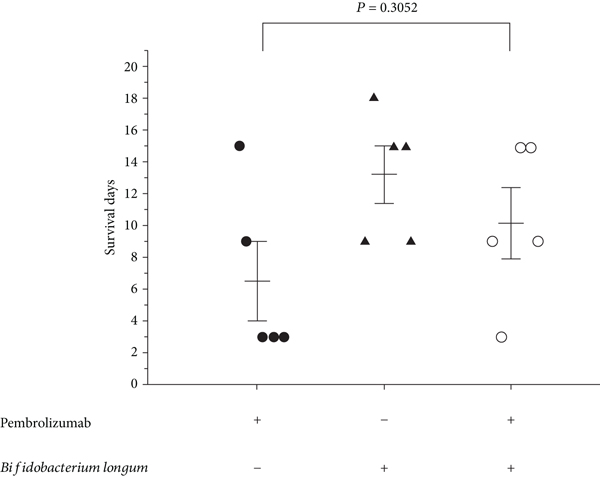
Construction of a Humanized PBMC-PDX Model to Study the Efficacy of a Bacterial Marker in Lung Cancer Immunotherapy
Source : https://www.hindawi.com/journals/dm/2022/1479246/
Construction of a Humanized PBMC-PDX Model to Study the Efficacy of a Bacterial Marker in Lung Cancer Immunotherapy: Commensal microbiome is a key factor of lung cancer immunotherapy efficacy. Elucidating...
Conclusion/Relevance: It was found that although both Bifidobacterium longum and immunotherapy drug pembrolizumab alone showed suppressing tumor growth, the efficacy of pembrolizumab was attenuated when administrated to mice colonized with Bifidobacterium longum. Further exploration revealed that Bifidobacterium longum caused significant...

Phase 1 trial of CV301 in combination with anti-PD-1 therapy in nonsquamous non-small cell lung cancer - PubMed
Source : https://pubmed.ncbi.nlm.nih.gov/36054490/
CV301, a poxviral-based vaccine, has been evaluated in a phase 1 clinical trial (NCT02840994) and shown to be safe and immunologically active (phase 1a). Preclinical data support a combination of...
Conclusion: We conclude that CV301 administered with PD-1 inhibitors is safe and clinically active in patients with advanced NSCLC. The frequency or severity of AEs is not increased, including irAEs for each component of the combination.
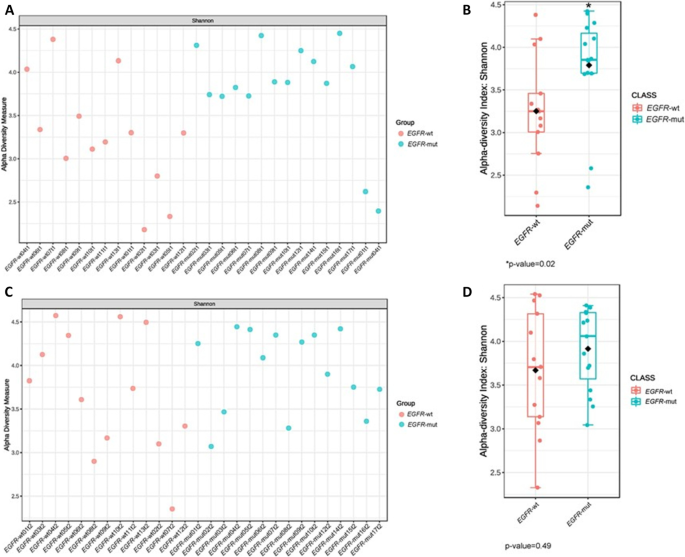
Gastrointestinal microbiota profile and clinical correlations in advanced EGFR-WT and EGFR-mutant non-small cell lung cancer - BMC Cancer
Source : https://bmccancer.biomedcentral.com/articles/10.1186/s12885-022-10050-3
Introduction Difference in clinical responses to cancer therapy in each patient is from several factors. Gastrointestinal microbiota is one of the reasons. However, this correlation remains unknown. This study aims...
Conclusions: Proteobacteria was dominant in Thai lung cancer patients both EGFR-WT and EGFR-mutant, and this phylum maybe associate with lung cancer carcinogenesis. Chemotherapy altered the gastrointestinal microbiota, whereas EGFR-TKIs had less effects. Our findings highlight the potential predictive utility of the gastrointestinal microbiota...
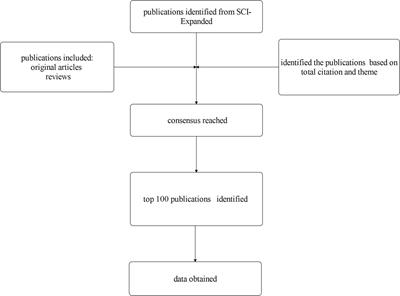
Evolutions in the management of non-small cell lung cancer: A bibliometric study from the 100 most impactful articles in the field
Source : https://www.frontiersin.org/articles/10.3389/fonc.2022.939838/full
ObjectiveThe study was designed to explore the evolution of non-small cell lung cancer (NSCLC) management in the last 20 years.MethodsThe top 100 most-cited papers on NSCLC treatment were retrieved from...
Conclusions: The United States as a nation and the Memorial Sloan Kettering Cancer Center as an institute contributed the most to this field. The New England Journal of Medicine is the most eye-catching journal. Hotspots of NSCLC management have almost undergone an evolution from chemotherapy and radiotherapy to targeted therapy to...

Safety of First-line Nivolumab Plus Ipilimumab in Patients With Metastatic Non-Small Cell Lung Cancer: A Pooled Analysis of CheckMate 227, CheckMate 568, and CheckMate 817 - PubMed
Source : https://pubmed.ncbi.nlm.nih.gov/36049658/
1 Medical Oncology Department, Hospital Universitario 12 de Octubre, Universidad Complutense de Madrid, Av. de Córdoba SN, Madrid, Spain;. Electronic address: [email protected]. 2 Department of Medical Oncology, Institutul Oncologic Prof...
Conclusions: First-line NIVO IPI was well tolerated in this large population with metastatic NSCLC and in patients aged ≥75 years. Discontinuations due to TRAEs did not reduce long-term survival.